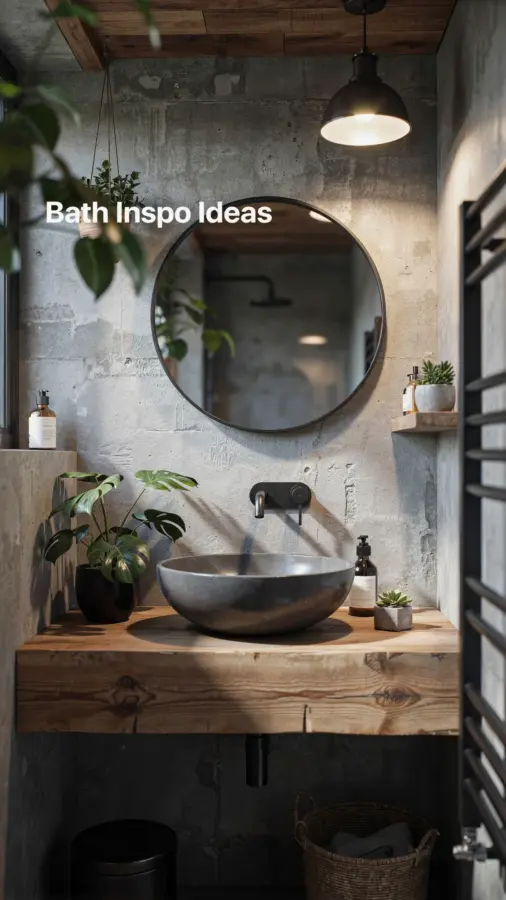
You do not need a complete renovation to make your bathroom feel like a spa. I learned this the hard way after spending a year looking at a beige builder-grade room that did nothing for my morning mood. Then I started swapping out small things, adding a teak bath mat, swapping the plastic soap dispenser for a ceramic one, and suddenly the room breathed differently. The whole idea behind earthy bathroom ideas is that you bring nature inside without turning your bathroom into a greenhouse or a lumber yard. It is about materials that feel honest and colors that calm your brain.
I have collected more than 48 ideas over the past few months, but this article is not a list. It is a practical how-to guide with real steps you can take this weekend. Whether you own your home or rent, you can create a spa bathroom with natural materials and soothing earth tones. Let me show you how.
Start with the Floor and Walls: Choose Natural Materials That Age Well
The biggest visual anchor in any bathroom is the floor and walls. If you are building from scratch or doing a major gut, go for stone or large-format porcelain tiles that mimic limestone, slate, or travertine. I personally love a honed limestone floor because it has that soft matte finish that does not slip when wet. But I know limestone can be pricey and needs sealing.
If you are on a budget, look at porcelain tiles with a matte finish in sandy beige, warm gray, or soft terracotta. Vinyl planks that look like wood are also a solid option, but avoid anything glossy. Glossy surfaces reflect light in a way that feels cold and clinical, the exact opposite of a spa.
- For floors – matte porcelain in earth tones, limestone, or wood-look ceramic tiles with a textured surface.
- For walls – large-format matte tiles in cream, taupe, or sage green. Or consider limewash paint for a natural, mottled finish.
- Avoid – bright white subway tile and high-gloss finishes unless you plan to layer with warm wood and organic accents.
Bring in Wood Wisely: Where to Add Warmth Without the Worry
Wood and water have a complicated relationship. I have made the mistake of putting untreated pine in a bathroom and watched it warp within months. Do not do that. Instead, use teak, ipe, cedar, or thermally modified ash. These species handle humidity and resist rot naturally.
A teak shower stool is a classic. So is a wooden bath caddy. But you can also add wood on the walls in the form of shiplap or slat panels, as long as you seal them properly with a marine-grade finish. I personally keep wood away from direct splash zones. A wooden vanity top works fine if you seal it with a hard wax oil and wipe it dry after each use. If that sounds like too much maintenance, go for a stone counter and put the wood on the mirror frame or a floating shelf instead.
Layer in Stone and Clay: From Vanity Tops to Decorative Accents
Stone does not have to be expensive marble. Think of soap dishes, toothbrush holders, and little trays made from river rock or slate. These small touches bring texture without breaking the bank. I found a small bowl made of African wonderstone at a flea market for ten dollars, and it sits on my vanity holding a few cotton balls. That single piece grounds the whole corner.
Clay is another unsung hero. Terracotta tiles can be used on a backsplash or even as a floor if you seal them heavily. Basins made from hammered copper or fired clay add an artisan feel. And if you want a real statement, consider a vessel sink carved from a single piece of soapstone. It is heavy, dark, and marks with white scratches that actually look good over time.
Pick the Right Greenery: Low Light Plants That Love Humidity
Plants are not just decor in an earthy bathroom. They complete the natural atmosphere. But you cannot just throw any plant in there. Bathrooms tend to have low light and high humidity,
#EarthyBathroom #BathroomDesign #SpaBathroom #NaturalHome #BathroomInspo
Leave a Comment